


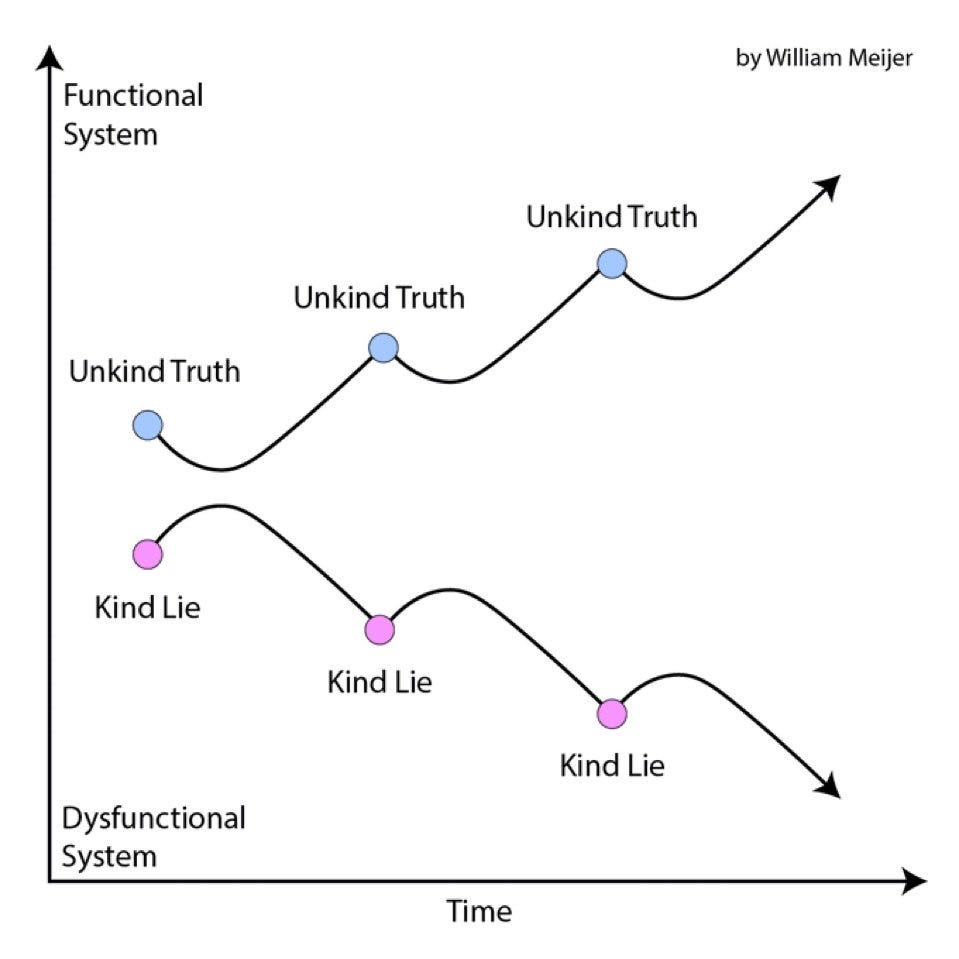
“Nothing offends people more than the truth” is an axiom I think couldn’t be more descriptive of the modern world.
A post I ran a bit ago (doesn’t matter which) where I didn’t even share my own position on an issue and simply described some events, elicited an, let’s say interesting email or two. But the behavioral science nerd in me finds it fascinating and not bothersome when people respond oddly, both because I’m on the spectrum and have been sharing thoughts online a long time. We’re at a point many lose their minds if they disagree with you on something, even when there’s plenty of data supporting the side they seem to be upset with. There is actually a very simple test you can run on any idea: simply post a basic truth on something like 2 + 2 = 4 and you can find out who is irrational pretty fast. It works! Try it sometime with your social graph, there’s any number of objectively truthful things we aren’t supposed to notice or comment on.
I actually think the core difference between myself and some of the, let’s call them “devout religious” (post)modern authoritarian secular crowd is I am willing to investigate ideas and decide for myself. I read my friend’s and peer’s thoughts online, click links, check out their citations, read their sources (if they have any, note the bad ones are typically just ‘appeal to authority’ arguments). But I can tell you many will not reciprocate if the idea is something that is part of their cult’s mythology. It’s actually so cult-like, they are worried for me if I share an idea that doesn’t agree with how they think. I even get notes of concern that I might be cancelled or “the optics are bad” for not thinking just like them. It’s crazy! I’ve published ideas online since the 90s, sharing my perspectives of the world from first principles and really only since the pandemic have people had this response. It’s novel and notable.
Let me tell you guys something. If “the optics are bad” or “I couldn’t be hired again” for merely sharing stories with links to such edgy citations as science journals, publicly available raw data or simply other interesting voices in the world from people who are in my observation super reasonable, while asking my community to have calm discourse, I’m happy to be excluded from any organization that doesn’t want that. It’s self-selecting (and honestly pretty hilarious). I stand by everything I’ve written here and on the old blog. I also don’t argue in bad faith even if I’m sometimes direct. I even take the time to reply to commenters and clarify thinking if they disagree or seem upset.
It’s just super clear to me many people who don’t even regularly practice religion have become dogmatic in their beliefs, interestingly people who even in recent history would be guided by science, data and reason. I say this as someone who grew up a small amount of religious, became not at all religious, and recently re-discovered my faith. I understand all sides of the trade here pretty well, especially at 40. But my faith is about God and the universe, not political dogma. God actually encourages me to seek out truth even if it’s painful.
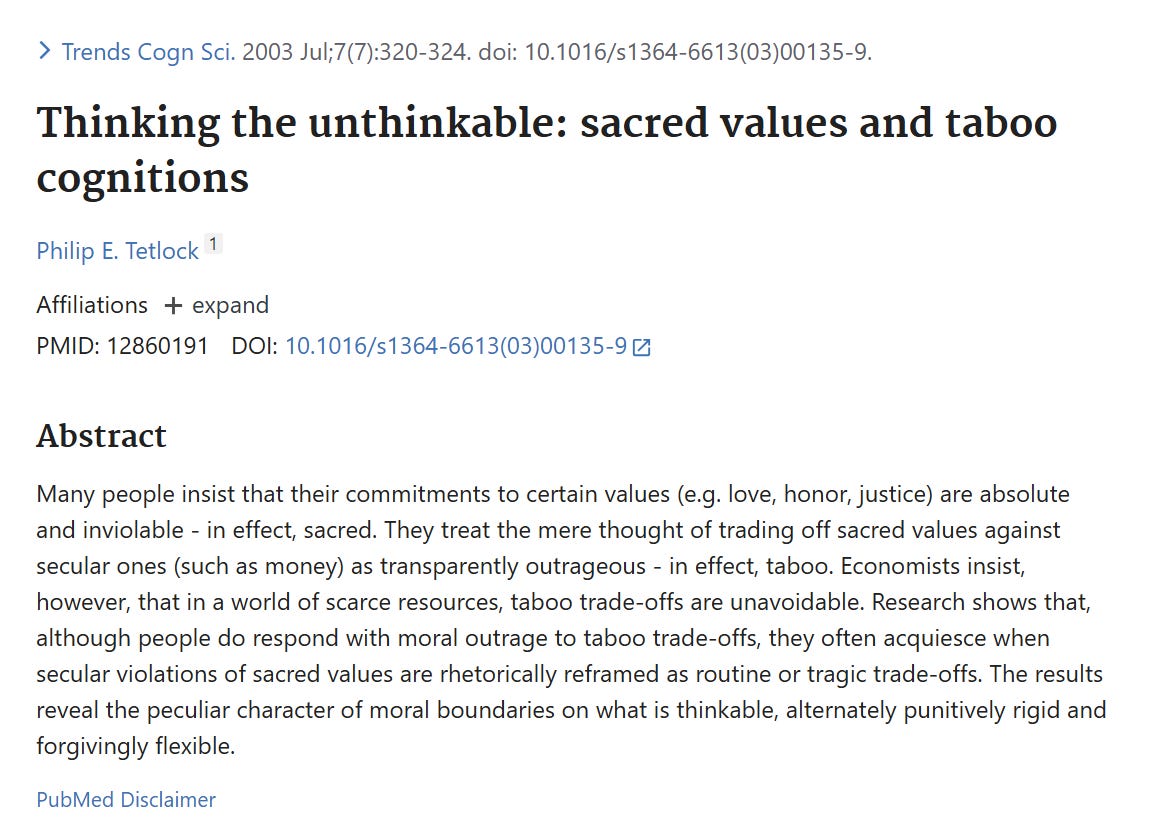
I saw an interesting story related to this recently in The Argument and that Jeremiah Johnson did a quick thread about on Twitter/X here talking about a big part of the problem, and this actually inspired today’s post. He describes how certain ideas can become “totemic beliefs” that people place outside normal cost-benefit analysis. Once that happens, you don’t think your own side (or for leftists, certain “oppressed” groups, sometimes even murderers or terrorists) can do anything wrong. Arguments become your tribal soldiers, and admitting your side was wrong starts to feel like betraying the group. This is the antithesis of liberalism by the way. Your north star should be base reality, not a tribe.
Anyway, it’s just an interesting observation as someone who has blogged on a variety of topics for 2 decades that you can spend all the time in the world adding links, citations and references to support your point, is many (most) readers will never click any of it let alone consider it. It’s basically just you reading research and citations for your own benefit and the other small % of nerds who actually will follow it. The majority of people will simply read, continue thinking about what they already had in mind before, and are unwilling to consider different perspectives or even just new data. Which is kinda surprising for people willing to read textual stories, but I suppose that’s why fiction is far more popular than non-fiction (actually saw a crazy stat about this in a recent post on the non-fiction book market collapsing, noting a few weeks ago the entire hardcover nonfiction bestseller list sold 42,000 copies, whereas just the top two bestselling fiction hardcovers the same week sold 52,000 copies). But you’re obviously a non-fiction reader. Perhaps the most interesting question to ask yourself: what would actually change your mind on a topic? If the answer is “nothing,” then you’re not really evaluating an idea anymore, you’re defending some kind of identity.
Interestingly, if these same types of tribally pathological people don’t like you, they will not just ad-hominem you (which whatever, who really cares) these are people with anger issues and obviously are unbalanced, who will try and attack your personal integrity and even attempt to get you fired or cancelled. But again, if you are honest, if you share opinions and perspectives that are morally aligned with the basic concepts of Western civilization then really they’re the ones who will ultimately look crazy. I personally never worry about this, and neither should you. And remember, it took 20 years for people to sober up after the Salem Witch Trials. Of course you could say I’m wrong on something, but again I think the difference is I’m willing to calmly consider the other side. My detractors hold pitchforks and I sit calmly with a cup of coffee. It’s pretty obvious if you’re a pitchfork person or not.
One final comment here, if you believe modern society is infinitely “oppressive” or “evil” and unfixable you’re wrong. We’re the most free we ever have been, things are the most fair, and a lot of what people are asking for now would actually make things far worse. I feel like people just don’t grasp the concept of diminishing returns. As Fukuyama warned at the end of the Cold War, once liberalism has won, people will start turning against the very peace and prosperity it created simply because they need something to struggle against:
“Experience suggests that if men cannot struggle on behalf of a just cause because that just cause was victorious in an earlier generation, then they will struggle against the just cause. They will struggle for the sake of struggle. They will struggle, in other words, out of a certain boredom: for they cannot imagine living in a world without struggle. And if the greater part of the world in which they live is characterized by peaceful and prosperous liberal democracy, they then will struggle against that peace and prosperity, and against democracy.”
This quote aptly describes at least one major pathology I’m speaking of in today’s post.
Anyway, it’s honestly surprising how dogmatic some people are on certain topics in modernity, even when there’s a whole host of research sharing multiple perspectives. Maybe the most surprising thing about the modern world for me.
Why can’t we struggle to make things even better instead of struggle to tear things apart?