


Up until recently, we weren’t really allowed to comment on the topic of immigration (amongst other things). I mean, you could, but because we were living under the great awokening, an era of extreme political correctness where certain topics were essentially off limits for not having the “approved” position, it was a huge personal and professional risk for normal people to even discuss. I wonder if we’ll return to that with Democrats taking back power, perhaps they’ll learn a lesson. The interesting test for them is will they learn why they got Trump in the first place, decide to be normal and keep power, or go crazy again and set up the next Republican to win. We'll see! Tune in next time on America, the reality show to find out.
Anyway, I can’t think of anything less liberal than not being able to discuss a topic as important as immigration like adults, every citizen should be able to discuss and have a say in what this policy looks like without being called pejoratives. Anyone who replies back with ad-hominem attacks for sharing opinions, data or simply the sin of noticing tradeoffs should reflect how they engage with discourse. That’s infantile, and this is a topic citizens should debate like adults. So I wanted to talk about this today with what is for sure the normal, centrist position on this topic.
I found a great video in which the Dalai Lama is interviewed with someone from the BBC, and it’s striking because the reporter appears to genuinely have more dogmatic religious belief than he, an actual religious figure does. It’s a perfect example of leftism as religion we wrote about before. It also shares the sane position on immigration. Watch it here or below, I’ve queued up the time, it’s worth the minute of your day and you can see how ridiculous these people are (particularly when called out by a studied religious leader immune from political brainwashing).
The lady in this video represents the Marxist pro open borders camp. These people will never give up that position, there's nothing that could happen, no series of events too extreme, amount existing citizens made to suffer, get scammed, taxes raised, culture changed, infraustructure burned to create a limiting principle. They genuinely think everyone should be able to live everywhere, without reservation. They don’t believe borders are real. They don’t think immigration laws should be enforced, that “no one is illegal on stolen land”. You never once hear them discuss tradeoffs (they think there aren’t any, which is the belief of a child, everything has tradeoffs). What these people really want is a one world government they fully control, abolition of private property, no more borders and full or near-complete state ownership of the means of production. That’s a one-way door if civilization went through we might never escape from.
But you don’t even need this scenario to see what happens when excessive, poorly vetted immigration is forced on the world, in many cases without a vote or warning to the native population. One cannot deny it’s frequently a misfiring of empathy by policymakers against their own population, as recent data in the Economist shows.
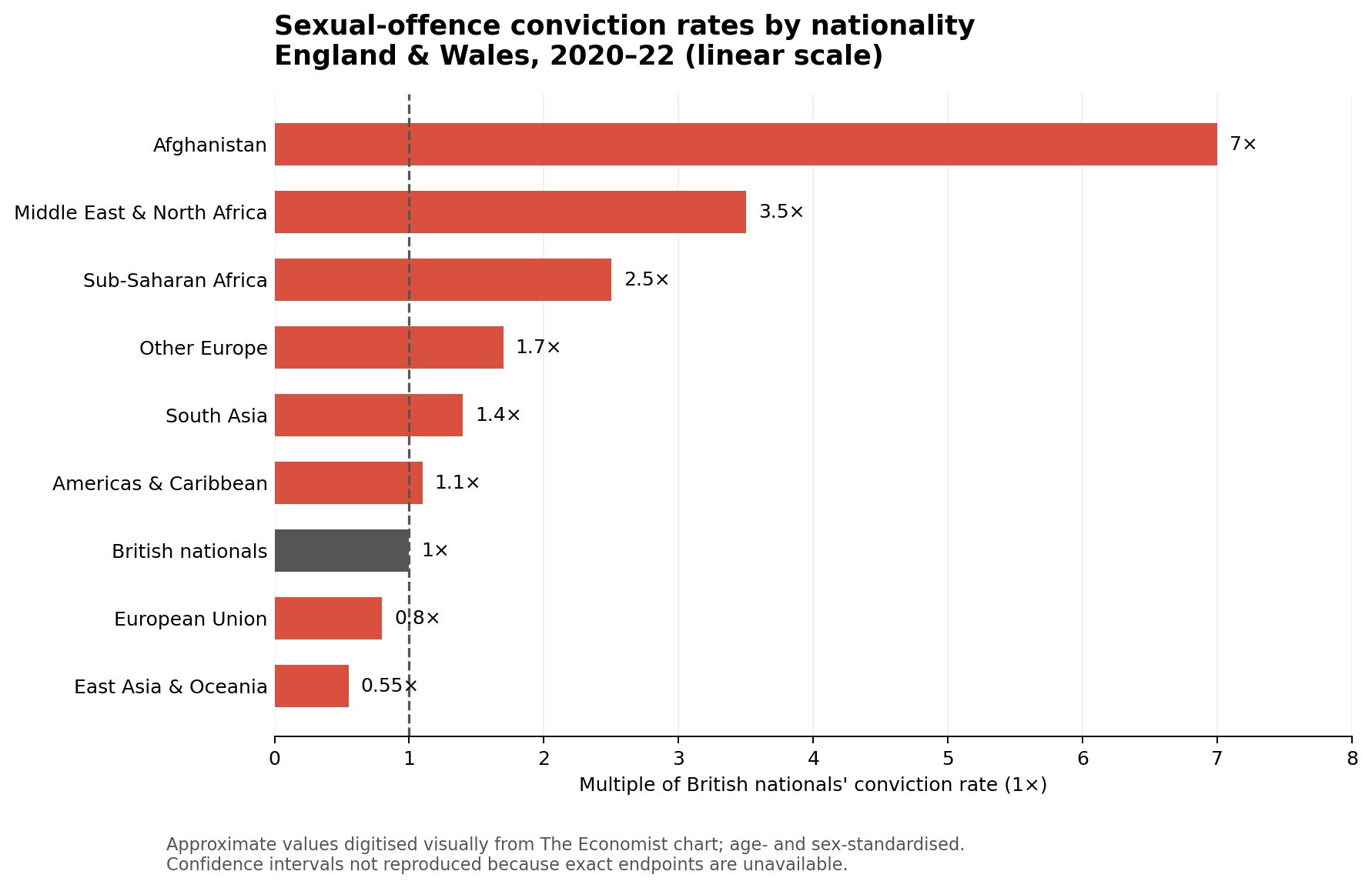
What would you say to someone whose daughter suffered an act of violence by someone imported to their country? How is it not more of a scandal what is going on in the UK and EU? Most people ignoring this are in a bubble as Bill Maher points out. He notes immigration could be great if done appropriately, but there’s such a thing as “too much” or simply just not screened/selected appropriately. I would say the people doing the screening should be legally liable, similar to if a judge releases a violent criminal too early and they engage in more violence, that judge should be liable too. There should be real accountability here, and that could help solve a lot.
Putting all this aside, there’s also a whole other argument that taking too many people from their own country into another is essentially helping keep that country stuck in their current state, as they never benefit from the ambitious and motivated staying and building. Who would be all that interested in this arduous task if they can simply move to a place that’s already gone through those steps and skip ahead? Where is the empathy for the developing nation? You can learn about the tragic reality of brain drain on poor countries in this economics explained video here, and also visually showing why taking in immigrants from impoverished countries doesn’t actually solve the problem of poverty in any meaningful sense here (in fact, this one is so good you should watch it before reading on I’ll embed it).
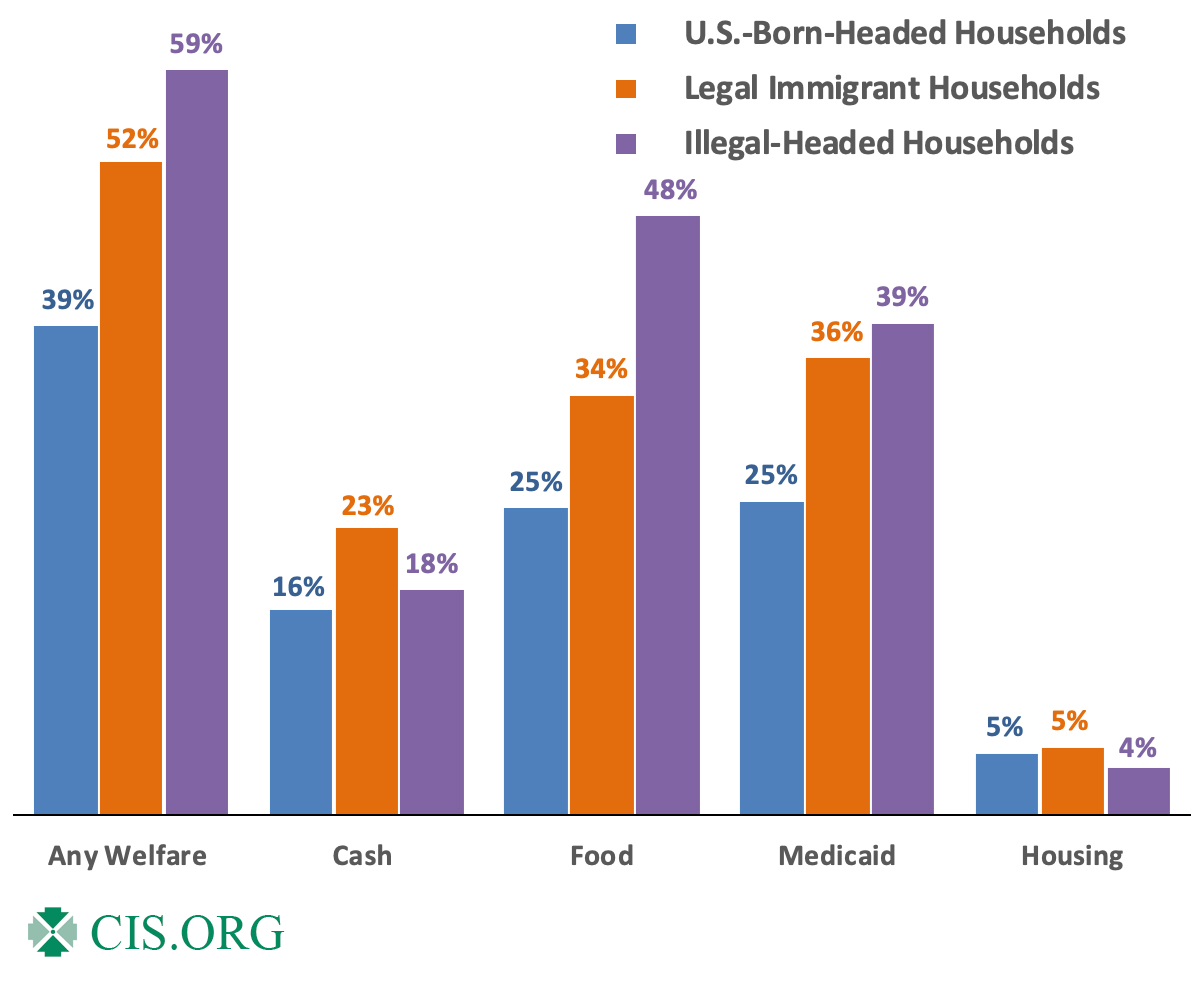
Another thing to note is in America currently, immigrant households have high rates of participation in welfare programs. I am actually pro an appropriate, measured amount of immigration, but only if we are able to select for those who are able to be economically self-sufficient. People coming here to work, contribute and build a life should be prioritized and people who cannot work are in my opinion not appropriate candidates.
Having policy that immigrants are given welfare simply incentivizes immigration from people who don’t wish to work. Additionally, illegal immigration is clearly a massive drain on any country and in a sane world no one who comes somewhere illegally should be supported by the taxpayer, it just makes no sense. It’s also unfair to everyone who comes somewhere legally to allow others to stay, especially when there’s a queue. Why would any country allow people to skip the line? I’ve heard both the left and the right say “no one is above the law,” so why would that not apply here?
As I said in the subhead on the immigration issue, the correct amount is not 0, but it’s also not infinite. We should take an considered and appropriately paced number from places that want to assimilate and become American, that do not bring with them extremist beliefs or wish to change our laws to be like their home country (it makes more sense for them to stay there if that’s the case). Also, they should be respectful of our laws and norms, not riot against existing citizens and their businesses, be productive, patriotic people. They should be able to make it on their own. They should be from places that are compatible with our values. They shouldn’t all vote precisely the same and not integrate.
We should have more rigorous standards than we currently do, and the UK and EU need even higher standards than they currently have. No one should be accepting of illegal immigrants who skirt the process or commit crimes, as this is disrespectful to those who follow the rules. There should be accelerated admission from people who wish to join us from countries like Canada, the UK, Australia and other places with lower crime rates and high trust. I don’t think my thoughts on this topic are unreasonable, they’re actually quite moderate. I do think the people who want no borders, or the people who think the number should be 0 are the extremists here, and America doesn’t like that. Restricted numbers, totally okay, as the Dalai Lama notes.
First, my personal opinion is that anyone who wants to immigrate to the US should be able to do so if they follow the immigration process. We need as many people as possible to offset the low birth rates, and I don't think that filtering by merit, etc. matters. We've seen immigration overall improves our economy and boosts everyone. That's just my opinion.
Now for some facts:
- Vetting of immigrants in the US is not a problem. The crime rates in the US of immigrants are much lower than citizens. The lowest rates are illegal immigrants, who aren't even vetted at all.
https://docs.house.gov/meetings/JU/JU01/20250122/117827/HHRG-119-JU01-20250122-SD004.pdf
- Contrary to your chart from CIS, the Cato Insitute published a study showing that welfare rates among immigrants are lower than for citizens. Why the difference? These charts depend entirely on how you define welfare. If you dig in you'll see what I mean, and that it's not really the issue you make it out to be:
https://www.cato.org/blog/immigrants-still-use-much-less-welfare-native-born-americans
- If we don't do something to turn around our immigration, it will be bad for everyone. The Brookings Institute wrote a good paper on this:
https://www.brookings.edu/articles/the-impact-of-immigrants-on-the-us-economy/
So, generally I disagree with the factual assertions in your article. Except for the crime rate in the UK, I have no idea what's real over there and don't have the time to research it.
Yes, immigration should involve meaningful vetting and an expectation of integration, but I’d separate those goals from judging people by their country of origin.
Vet individuals on their history, conduct, and credible evidence of risk. Treating a country’s aggregate statistics as a judgment about an individual applicant is collective attribution. It will never be a substitute for assessing that person.
And if integration matters, and it should, then policy should help people achieve it: accessible English classes, civic education, employment guidance, and opportunities to participate in their communities. Some assistance exists, but “immigrants should assimilate” isn’t a complete policy unless we also address how newcomers are supposed to get there.
Expecting people to respect the law and other people’s rights is reasonable. Expecting them to arrive already culturally indistinguishable from us, or treating their birthplace as evidence that they can’t integrate, is something else.
Side note, the "illegal immigration is clearly a massive drain" and the one-sided brain-drain framing don't really hold up when you check out CBO's US-wide federal estimate & recent research consensus. CIS & Cato also reach opposite results on how welfare is defined. Your feelings are clouding your interpretation of the data.
And as someone who has immigrated to the US from one of the countries you hold up on a pedestal, both 1st and 2nd Trump administration did their damnest to make even legal immigration as painful as possible, to the point of cruelty. Miller, Rubio, and Vought have a lot to answer for. We're losing talent, and our technological edge in software is waning (Chinese open weight models are that damn good), why would anyone want to come here and contribute to American exceptionalism now? The damage has been done, and we will reap the consequences.