


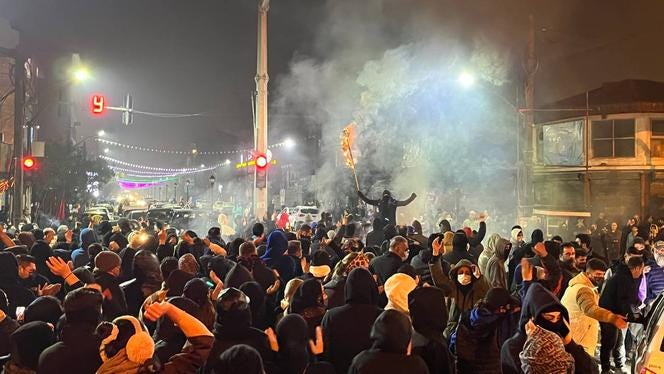
Over the past few weeks, two political earthquakes hit within days of each other: the sudden fall of Nicolás Maduro in Venezuela and the wave of protests shaking Iran to its core. At first glance, they look like unrelated stories (one about a failed socialist regime, the other about a theocratic one). But both point to the same deeper shift: ordinary people rejecting the ideological mash‑up that has quietly united parts of the Western extremist left for years, a kind of Marxist‑Islamist alliance built on shared opposition to “the West.”
This coalition had what they felt was a powerful narrative. Islamist movements denounced Western values and power structures. Post‑colonial theorists framed that critique as part of a global struggle against capitalism. And Western radicals found moral and emotional fuel in adopting those struggles, especially through the lens of Israel‑Palestine. The result was a loose transnational story about “resistance” that made Caracas, Tehran, and Gaza part of the same moral project.
But on the ground, that project is breaking apart. Venezuelans flooding the streets after Maduro’s removal weren’t cheering for some grand leftist victory. They were celebrating the end of a government that wrecked their economy and hollowed out their institutions while insisting it represented “the people.” Liberation, for them, meant freedom from the so-called revolution.
In Iran, the rupture is even more existential. What started as anger over inflation turned into open rebellion against the theocracy itself. These aren’t Islamists demanding reform: they’re young people, workers, families shouting for an end to a system that polices thought, gender, and belief. It’s a generational revolt against the very form of religious authoritarianism that Western radicals treat as an “authentic” alternative to Western secularism. If the left was actually with the people, they would be on the side of the Iranian citizens, not its oppressive government. But the extreme ones aren’t, and that kind of gives away the game.
So now we have Caracas and Tehran: two societies rejecting, in real time, both pillars of the supposed global resistance: failed socialism on one side, failed theocracy on the other. The “Islamo‑left” discourse built in academia and activist circles predictably is disconnected from the people it claims to champion. The hypocrisy, of course, is palpable.
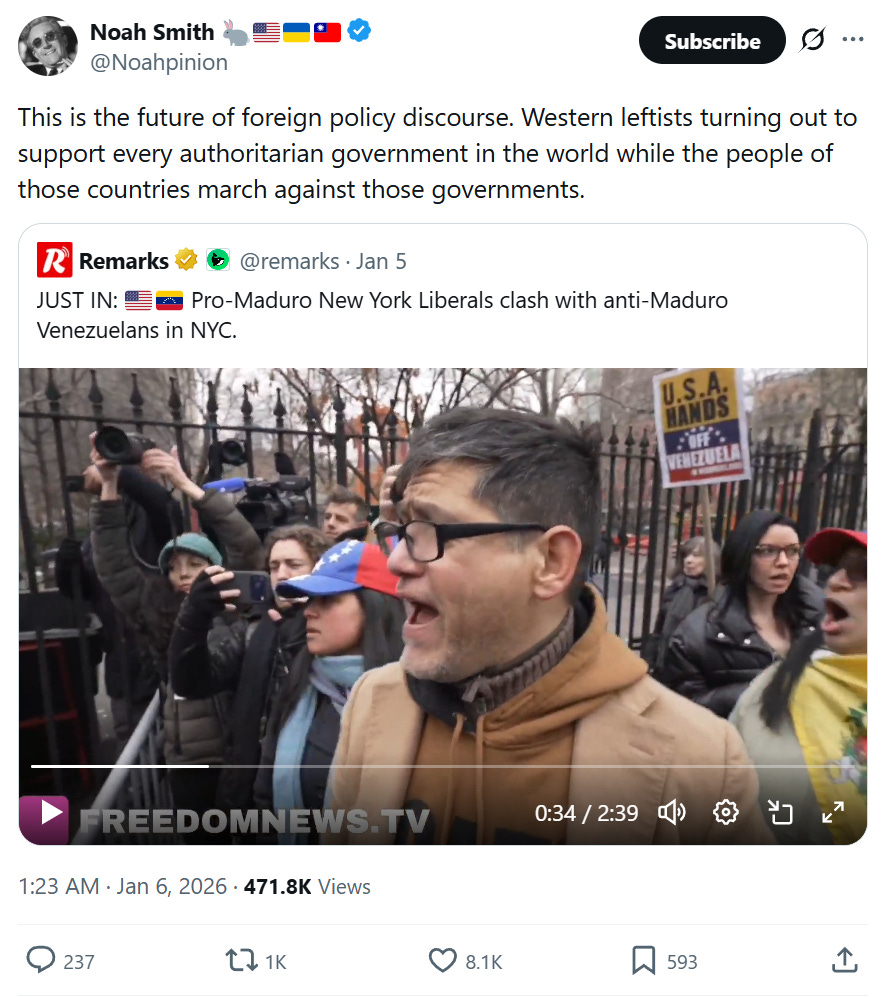
And while all that’s happening, the moral attention economy that once glued this alliance together, above all, the Israel–Palestine issue, is losing its centrality. After a year of saturation coverage, attention is fragmenting again. There’s only so long you can power an ideology on outrage and propaganda alone.
None of this means radical leftism is done, or that solidarity movements vanish overnight. But it does mean that movements claiming to speak for “the global south” are being tested by the actual south, and the results don’t match the theory. Real change isn’t happening in seminars or solidarity statements. It’s happening in the streets, where people are saying, clearly, they want something much simpler: dignity, competence, freedom.
Caracas and Tehran are reminding the world of a lesson every movement eventually learns: you can’t build an ideology that outruns the people living under it.
Any self-contradictory ideology will eventually come to resemble the ouroboros in word and deed.
The problem with US folks is that they think they understand how the world operates - whether it be left or right from an America-centric perspective... shouting at Washington Square Park comfortably while the world burns has not made a speck of difference for anyone... these people dont even know what happens on the front line.