


“Show me the incentive and I will show you the outcome.” —Charlie Munger
I’ve written before on the media’s subprime attention bubble, and honestly this could be the basis for an entire publication. While I generally stay out of critiquing political reporting, it’s of course a big part of this, and it’s probably useful to highlight a story in this category for some of you to see. Because it’s everywhere. And it’s important to actually understand issues and what we need to do to fix them, vs just point fingers at symptoms or make people outraged. We’ll never fix anything that way. Chris Bray does a good job covering this on his Substack, I highly recommend subscribing.
So let’s look at a recent example of a widely reported headline last week claiming the Trump administration “embraces gas guzzlers and air pollution by weakening fuel economy standards.” Sounds awful, who wouldn’t be upset?
But this is exactly how a complicated regulatory issue gets flattened into a moral cartoon. You don’t have to like the Trump administration to see the pattern: reduce complexity, assign a villain, deliver emotional certainty, and skip the underlying mechanics that actually shape outcomes. This sort of thing happens under politicians of all variety.
The fuel-economy story is a perfect example:
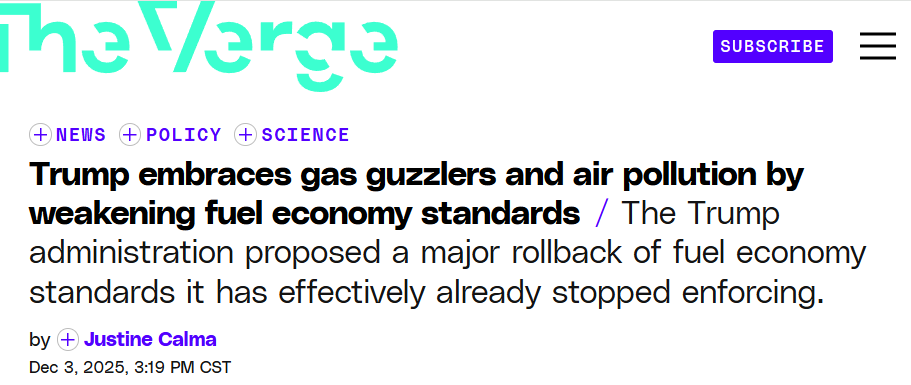
The headline in the Verge (and story itself) doesn’t inform you, it primes you. Very similar stories on this topic in Gizmodo, MSN and other publications I read through did the same thing. They frame intent (“embraces pollution”), moralize a technical policy change, and signal the “correct” emotional reaction. Pieces like this reflect the business incentives of attention-driven media, which reward emotional framing over technical literacy.
Yes, the administration proposed new fuel-economy standards. That part is true. But what the coverage omits is the structural feature of the system that actually matters for emissions, safety, and vehicle design:
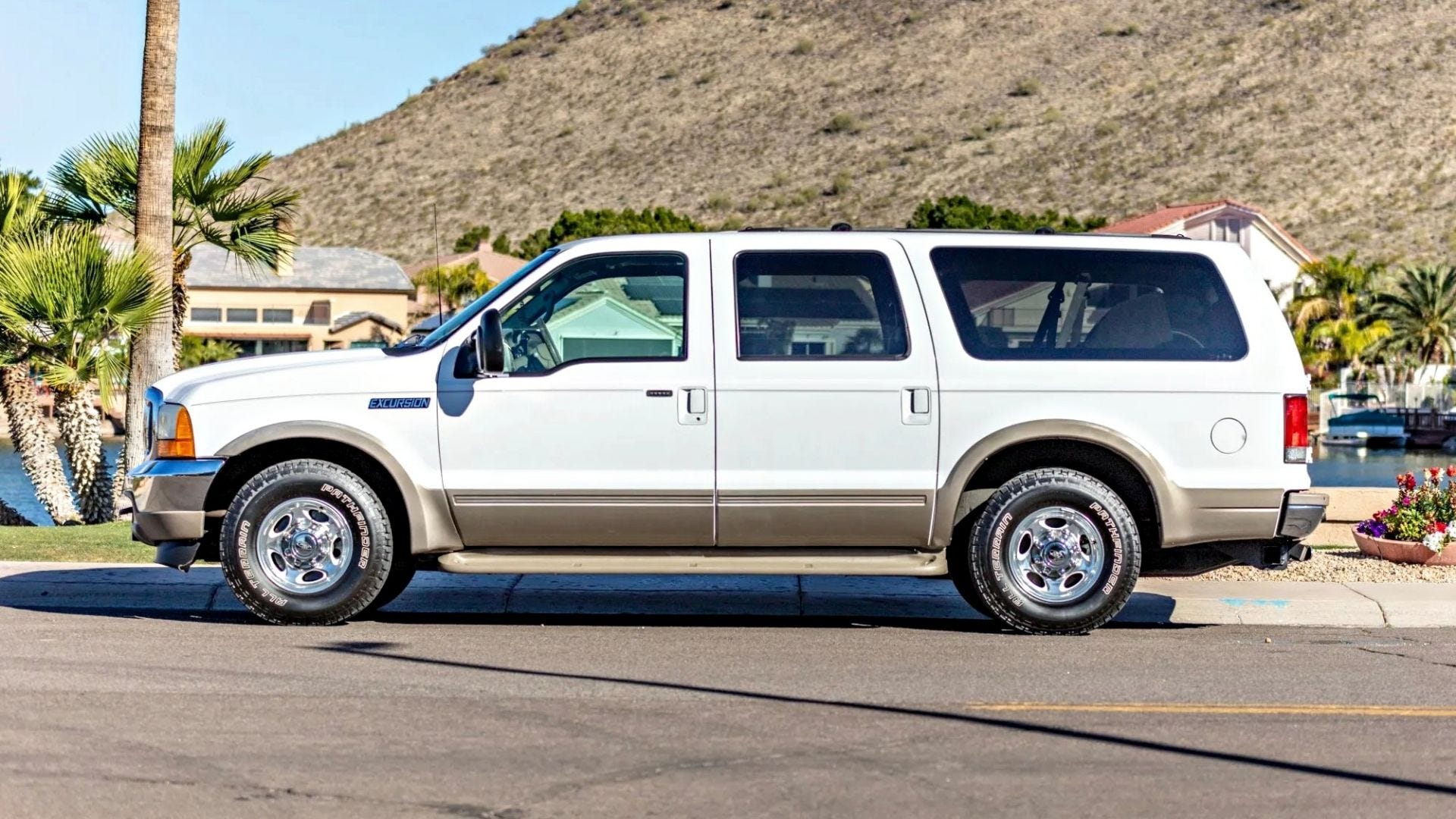
CAFE standards themselves are what made American vehicles massive gas guzzlers
That crucial context, that modern fuel-economy rules reward automakers for making vehicles larger because the standards are pegged to vehicle footprint, never makes it into the reporting. And without that, none of the outrage or moral framing makes sense. This is the real story that should have been covered previously, and linked back to in any new reporting (of course, doing this would undermine the fresh round of outrage being generated today).
Anyway, modern CAFE rules don’t set one mpg target for all vehicles. They use an attribute-based formula tied to vehicle footprint (wheelbase × track width). The larger the footprint, the easier the fuel-economy target. This means:
A bigger truck needs to meet a lower mpg target than a smaller car
Automakers can comply cheaply by making vehicles larger, not more efficient
The entire fleet inflates over time because the rule rewards size
This wasn’t a Trump-era invention. This system has existed for years, across presidencies. It was intended to prevent automakers from downsizing cars dangerously based on regulators’ belief that smaller, lighter vehicles posed higher safety risks. But like many bureaucratic formulas, it also had massive unintended consequences.
Now notice what happens in the reporting: instead of explaining this crucial context, they frame everything like a morality play.
Trump “lets carmakers pollute more.”
Critics warn of “health risks.”
Environmental groups issue dire predictions.
Quotes are chosen to generate outrage instead of understanding.
All while ignoring the structural incentive that actually explains the bloat of the modern American vehicle in the first place.
One commenter on the story said it succinctly:
Except CAFE regulations did the opposite of what they’re supposed to. Small vehicles get good gas mileage, but get punished for their small footprint. Bigger vehicles have less stringent rules for gas mileage, thus making them easier to fit into CAFE requirements. We end up with either underpowered small-mid size vehicles or boats with unlimited horsepower. I’m happy to see this go, would love the return of a normal sized Ranger or a sedan with a v6.
Media selective skepticism is another tell
When Trump claims the action will lower vehicle costs, outlets respond, correctly, with “show us evidence.” Good. Hold claims accountable. Let’s hear the specifics.
But when environmental advocates give projections, or when analysts declare permabear-like commentary on pollution or costs, those statements go unchecked. No scrutiny, no caveats, no explanation of assumptions.
This all moves us away from journalism into narrative reinforcement. The Verge, once a more honest technology publication, has become amazingly great at doing this with coverage against people and companies they don’t like, and like many others now just cheerleads a specific side.
I don’t care about defending the Trump rule, this isn’t a political blog, and this post isn’t about politics. What I would like from media is an honest accounting of why the world is the way it is. New CAFE standards could reduce emissions, but only if they’re paired with a rethink of the footprint formula. Otherwise, you’re ratcheting up targets that continue simply rewarding vehicle expansion.
Bigger vehicles → easier targets → regulatory compliance → worse real-world fuel economy.
But no one hears that story. They hear “good” versus “evil,” served with a side of curated outrage.
Why this matters
Because this is how the media covers almost everything now:
Take a complex system
Reduce it to heroes vs villains
Ignore the mechanisms
Declare the political enemy “for pollution,” “against progress,” etc
Leave the public no wiser about how the system actually works
The result? People think problems stem from one bad person, one political party, one company or one election, when the real drivers are often regulatory design, unintended incentives, and decades-old frameworks nobody talks about. Auto execs aren’t sitting around like cartoon villains stroking cats, sipping champagne and excited to pollute more. They just follow incentives, which rule everything around us. We should know what they are.
Again, I don’t really care if you like or dislike Trump (or any politician). But you should be aware of how consistently the media withholds the actual mechanisms that matter, or simply frames a story for their political tribe. Once you see the pattern, you’ll notice it everywhere. Note that because of this, many of your friends root for one side of things they probably wouldn’t if they knew all the details and context.
Oh, and as for cars I love my very efficient electric vehicle, even if some people (who you’d think were pro reduction of carbon emissions) were strangely upset when I purchased one. These are the future, are much better cars and will eventually win over gas vehicles anyway.
"[T]his is exactly how a complicated regulatory issue gets flattened into a moral cartoon...instead of explaining this crucial context, they frame everything like a morality play."
Bravo. I can't think of a better encapsulation of today's Media Industrial Complex. Just think: if the news is fake, imagine history!
This is gosh-darn brilliant.
Munger's line is a driving force in ways people just don't realize. I've watched it happen countless times — am watching it now in the American workplace — and we understand that people are both rational and incentive-driven.
Related: A company I worked at a decade or so ago — name redacted — went to an exec and said "you need to lay off a bunch of people so we can make numbers." He refused on moral grounds. They went back to him again, but stated it a different way: "If you want to keep your job and get your bonus next year, you need to lay off a bunch of people."
We know how it ended.
We were incentivized for a long time to "go electric." It was long enough for Tesla to establish dominance. But it wasn't long enough for the rest of the auto industry, and Trump came in and nixed the necessary regulations to get back to some sense in the industry.