


Previously I wrote about the “stick to sports” phenomenon, the impulse some have to tell someone else their observations are off limits because they said something outside a supposedly approved lane. Today I want to talk about a similar pattern I’ve observed on multiple occasions that’s more pernicious. Maybe you’ve seen it too.
When a person sees some topic of discourse they don’t like being noticed, the following is what happens after. First, they say: it’s not happening. Then, if that doesn’t work: okay, it’s happening, but it’s not a big deal. If that doesn’t stick: why do you even care about this? And the latest one, which might be my favorite for sheer audacity: yes, it happened, but it’s over now, so you can stop talking about it. Ironic that the expiration date on noticing a thing is set by people who didn’t want you noticing in the first place.
This is a fascinating little behavioral loop that amuses me when I see it, and it’s happened enough times I wanted to put it down in a post so I’d have a reference point (and you can too). Each stage of dismissal is essentially a ratchet, when one position becomes untenable, it’s quietly abandoned and a new one takes its place, all without acknowledging the previous denial ever happened.
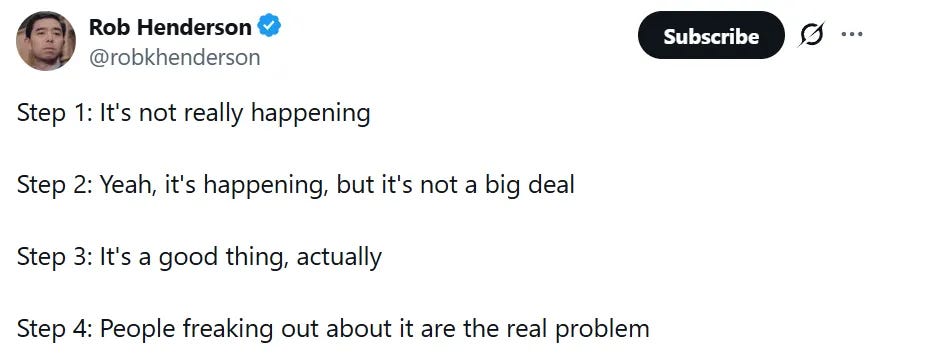
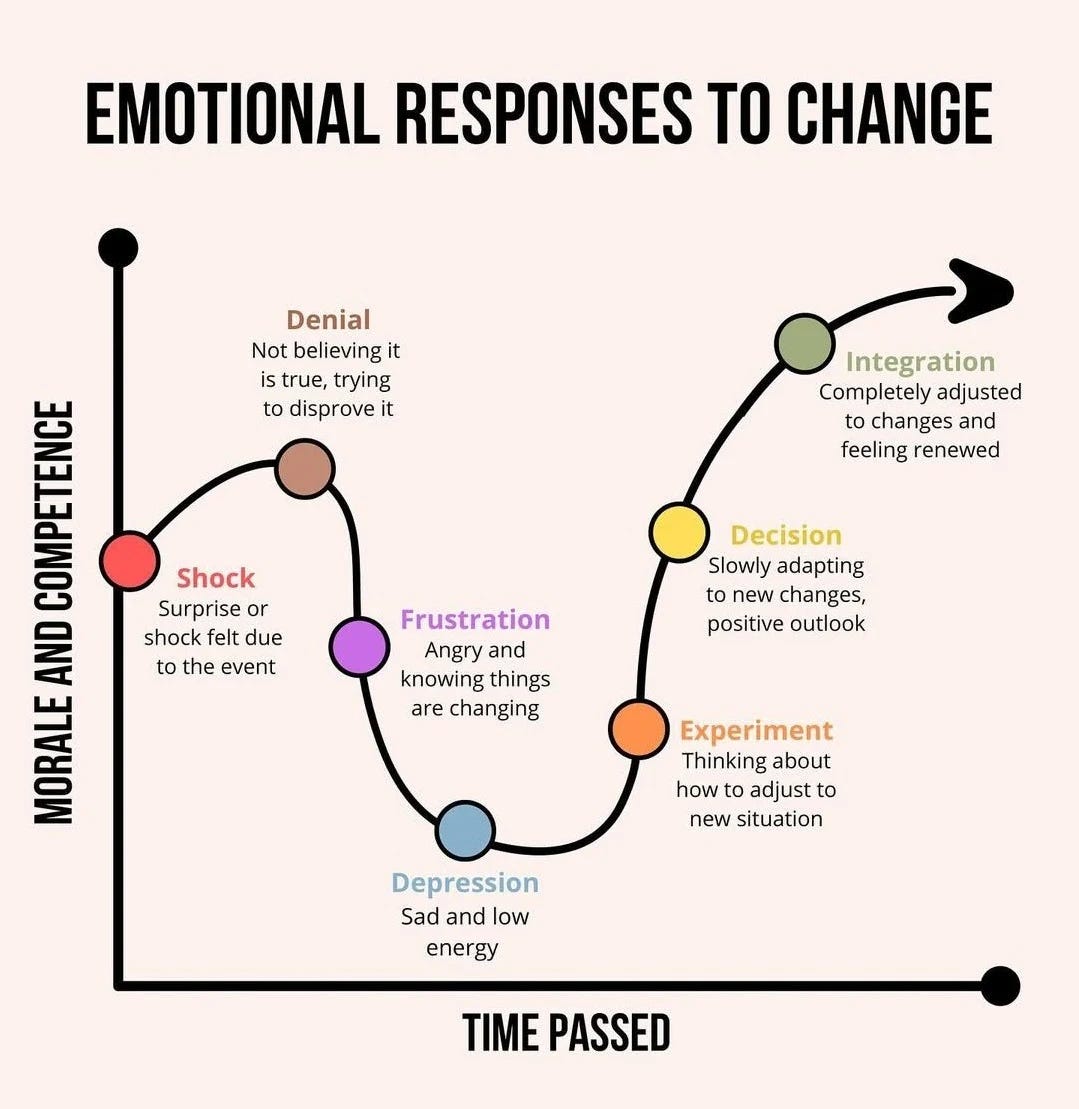
I’m hardly alone in noticing this phenomenon, Rob Henderson posted about a variation of this which is similar enough years ago (I personally notice steps 3 and 4 vary a bit, but mostly say the same thing). Clearly there is some psychology on display here, and it’s very similar to one of those the steps of grief flow charts.
What strikes me most, though, is the reaction baked into all of this: the instant assumption because I’ve written about something, I must be a committed partisan of some side or cause. I write something noting a cultural shift, and suddenly someone thinks that means I’m endorsing of an entire buffet of other ideas I’ve never endorsed. I observe something odd in how institutions behave, and I’m assigned a tribe because I’m not precisely on the side of people who think they’re “the good guys” who are beyond critique. The idea that someone might simply find a thing interesting and worth examining or simply worth articulating seems almost incomprehensible to certain people. The sin of noticing, apparently, is itself a political act requiring justification.
I write about what I think is pertinent or interesting and what I see as true or important. The blogging project which I’ve done for nearly two decades now has always been about trends, culture, and the occasional uncomfortable observation. I don’t have a specific political agenda but do have a low tolerance for things that seem strange that I don’t see enough people talking about, and a habit of writing them down. If a pattern in culture is worth examining, I’ll examine it because I think it’s worth our time and notable. Usually, it’s because I think we can do better. And I don’t think certain topics are off limits, because I don’t look to a tribe for approval. You should live like this too. Think for yourself, it’s great.
I’m actually not calling out commenters today, the people willing to debate things in public here are mostly good faith. The most interesting replies are via email privately. What I find most telling is that the volume of the reaction tends to be proportional to how much the observer doesn’t want the thing observed. If it were truly not a big deal, why the energy? The ‘stick to sports’ people, as I wrote before, reveal themselves precisely by showing up. Silence is the response to things that don’t matter. The dismissal cycle above is the response to things that do.
So no, I won’t stop noting things when told they’re supposedly over. That’s not how observation works, and it’s a great way for us to forget and repeat past mistakes. And unfortunately, I think a lot of bad ideas have deep tentacles into our world and we’re going to need to do more work to fully extract them. Of course some might simply be terminal philosophical battles, and that’s fine too. But don’t dismiss things you don’t like or call people names, engage with the issue like adults.
I'm pretty stingy with my subscriptions since they can get so out of hand, but I just "upgraded to paid" for your blog, since I couldn't agree more with this brave, smart, essential thinking. Not sure what topic(s) this post is in response to, but it's a shame if you're feeling attacked by those on either side of the political spectrum. I myself find the anti- and pro-Trump cliches to be screaming bores - I avoid people who have nothing else to talk about. Thank you again!
You've described the entire communications strategy of the Trump administration here...