


I’ve previously written on the problems with AI and creativity, the rise of AI nihilism, how people are building AI spam companies and where AI actually does make sense, along with related topics. But two recent stories on the state of AI deserve to be read together and notice something else interesting: the people building AI have convinced themselves apocalyptic messaging is a feature, not a bug. Of course this is a terrible idea, and the longer this goes on the more damage it does. Let’s go through this topic briefly as I think it’s instructive.
The first story from Noah Smith: AI has the worst sales pitch I’ve ever seen
Noah opens with what might be the most damning analogy I’ve read about the current state of AI comms:
“Hi. Do you have a moment? I’m from the Cursed Microwave company. Our product is much better than a traditional microwave. Not only can it automatically and perfectly cook all your food, it also microwaves your whole body, so you and your family are paralyzed and unable to ever work again. Don’t worry, though, because when everyone has a Cursed Microwave, our society will probably implement Universal Basic Income, and you and your children can just go on welfare! Oh, by the way, we estimate that there’s a 2 to 25 percent chance that our microwaves will put out so much radiation that they destroy the entire human race.”
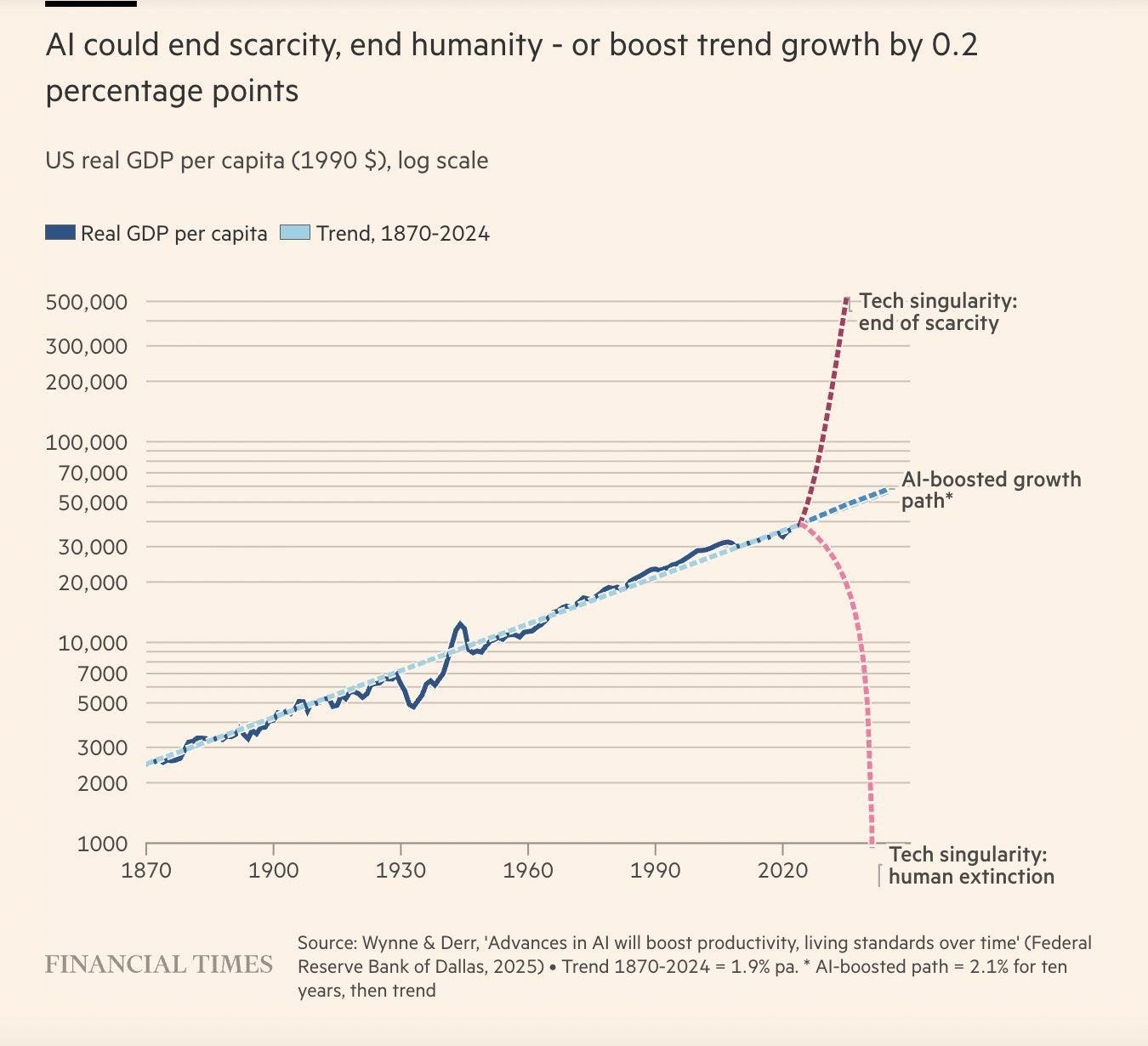
It’s absurd on its face but also metaphorically accurate. When the CEOs of the most powerful AI companies voluntarily attach extinction probabilities to their own products in public interviews, something has gone very wrong, in strategy and also basic judgment.
The second point Noah makes in his story on job displacement is perhaps even more important. Executives keep racing to be first to say the most alarming thing possible about labor market disruption, and Noah correctly identifies why: they’re playing to investors, not to users. When your primary audience is a room full of capital allocators, “everything will be disrupted” sounds exciting. When that same message escapes into the mainstream and reaches regular people, as it inevitably will, it just sounds like a threat. That’s a self-inflicted wound, and I’d also argue communications malpractice.
It’s another case study in what happens when the professional-managerial class runs comms. I’ve written before about how the marketing industry has largely been captured by bureaucrats optimizing to avoid blame instead of moving people. Tech is no different, just with a different flavor of dysfunction. In traditional marketing you get soulless rebrand committees, in tech you get founders who bypass the communications function entirely because they’re engineering-led, go directly to a Bloomberg interview, and announce their product has a 25% chance of ending civilization. Neither approach works and both reflect an industry that has lost the plot on what marketing is actually supposed to do. I’m somewhat more sympathetic to the tech sector marketers, because frequently they’re ignored and then later have to play damage control. Still, it’s our job to advise and stay ahead of things.
The second story from Ashley Mayer: We need better stories about the future
Ashley’s piece goes into the structural reasons this is happening. She puts it plainly:
“As an industry, we’re collectively failing at our primary narrative objective: to give people a reason to root for the future.”
The industry has a narrative crisis, and she’s right for the same reason Noah says: the big players are talking to investors far more potently than users. The apocalyptic framing makes capex numbers make sense to shareholders in the near-term, but unintentionally helps undermine public trust (so will hurt them in the long-term). I thought Silicon Valley didn’t like short-termism, but maybe that’s just the part of the cycle we’re in.
The other point Ashley makes has the right insight for marketers: the best brands have historically made someone else the hero of their story. Apple celebrated the creative misfit. Nike celebrated the everyday athlete. When you cast your company as the hero and everyone else as the recipient, you’ve at best turned your potential customers into supporting characters and at worst made them feel like obstacles. That’s a catastrophic branding error, and the biggest names in AI are making it in real time. Ashley also puts the opening on startup founders to fill the vacuum, which could very well be the right call, if the incumbents have truly boxed themselves in and can’t find a way out.
The irony here is thick: AI companies possess genuinely transformative technology with real upside for real people, yet they’ve somehow packaged it as the most anxiety-inducing product launch in modern history. This only could happen if the communications function at these brands is either captured by people who don’t know how to tell a human story, or are being bypassed entirely by founders talking directly to capital markets and forgetting everyone else exists.
A better story is right there: cures, productivity, access, abundance. Someone just has to want to tell it, and hire people who actually know how. The opportunity is clear as day.
One of the interesting things about AI is that there isn't a clear leader at the beginning to shape the narrative. Apple shaped the smartphone narrative with the iPhone, but despite all the money AI is fragmented and still a knife fight for the big players. It's not surprising there is no cohesive narrative since there is no incentive for the players to cooperate.
GLP-1s had a similar problem at the beginning. Will they just lead to more bad behavior? It was when the benefits reached everyone that the narrative settled down amongst the competitors.
AI is the same way. Students are already using AI all day, so are teachers. As the benefits hit more and more of the population the narrative will settle down.
Or, maybe there will be one winner and they will take over the narrative...
"I'm tired of this (doomer garbage), Grandpa"😒
The middle road is always the most likely outcome. Will AI end humanity? Maybe. More certainly, someone (like me) will vibe-code a defect into critical infrastructure and take down the power grid for a third of the country.
I can write 10x more code, but it doesn't meant that it's GOOD code. Much like shooting a basketball, development is all about the fundamentals. Agents are great, but they make A LOT of mistakes and require human oversight.
And guard rails.